Examine documentation, cutting, relocation and international cooperation alongside the displacement that the triumphal rescue story can exclude. This is a method for reading evidence, not a simulation of certainty or an invented first-person visit.
READING 01 / T−06
A dam created several emergencies
The High Dam promised electricity, water control and development while the reservoir threatened archaeological sites and inhabited Nubian landscapes.
What supports it
Engineering plans, surveys, oral histories and government records describe different stakes.
Where certainty stops
“Saving Nubia” can collapse monuments, communities and national projects into one uncomplicated goal.
ASK THE TIMELINEWhose emergency receives the clearest archive?
OBSERVATION Write one feature that another reader could verify.
CONTEXT Record where, when and how the evidence was found or documented.
INTERPRETATION Use comparison, then state the degree of uncertainty.
READING 02 / T−06
Documentation raced the water
Survey, photography, drawing and excavation expanded across Egyptian and Sudanese Nubia. Recording preserved knowledge but did not preserve every place.
What supports it
Campaign archives document sites, methods, teams and deadlines.
Where certainty stops
Emergency conditions shaped what was selected, excavated and left behind.
ASK THE TIMELINEWhen is a record a form of preservation, and when is it evidence of loss?
OBSERVATION Write one feature that another reader could verify.
CONTEXT Record where, when and how the evidence was found or documented.
INTERPRETATION Use comparison, then state the degree of uncertainty.
READING 03 / T−06
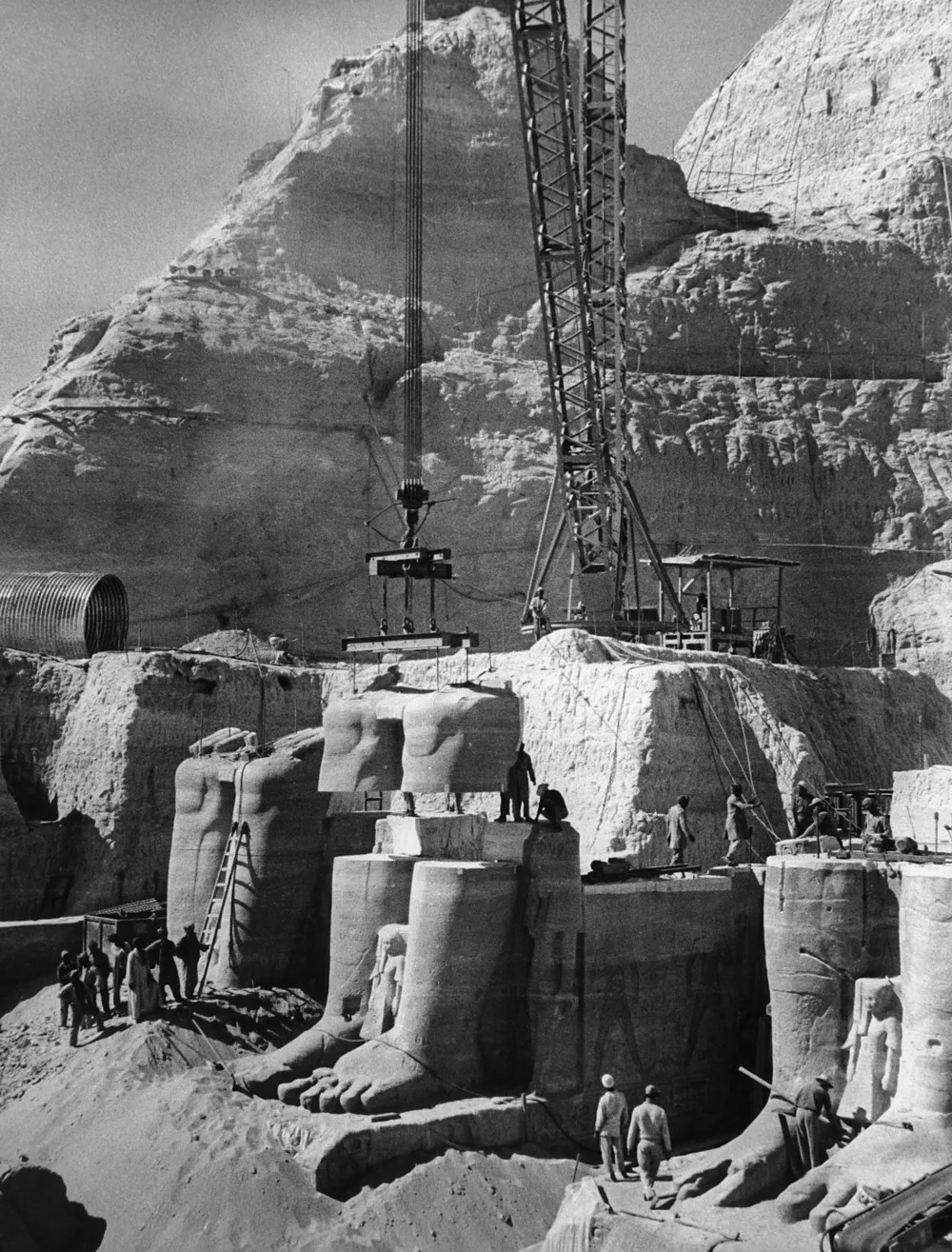
Stone was turned into numbered pieces
At Abu Simbel, engineers cut temples into blocks, mapped them and reassembled them higher above the Nile. The seamless visitor view conceals this procedure.
What supports it
Cut lines, construction photographs and technical reports preserve the operation.
Where certainty stops
Reassembly saved major fabric while changing setting, orientation systems and material context.
ASK THE TIMELINEShould evidence of relocation remain visible to visitors?
OBSERVATION Write one feature that another reader could verify.
CONTEXT Record where, when and how the evidence was found or documented.
INTERPRETATION Use comparison, then state the degree of uncertainty.
READING 04 / T−06
New landscapes were engineered
Relocated temples required platforms, protective domes and carefully chosen sites. “Moved” means the production of a new setting, not simple transport.
What supports it
Plans and before-and-after photographs show how topography was reconstructed.
Where certainty stops
Visual similarity can mask major changes in geology, approach and neighbouring sites.
ASK THE TIMELINEWhich qualities of place can engineering reproduce, and which cannot return?
OBSERVATION Write one feature that another reader could verify.
CONTEXT Record where, when and how the evidence was found or documented.
INTERPRETATION Use comparison, then state the degree of uncertainty.
READING 05 / T−06
Internationalism had a politics
UNESCO’s campaign mobilized expertise and funding across borders. The project became a model for world heritage cooperation and cultural diplomacy.
What supports it
Institutional archives identify participating states, specialists and exchanged monuments.
Where certainty stops
Celebration of cooperation can obscure unequal authority and Cold War context.
ASK THE TIMELINEWho decided which sites received the greatest resources?
OBSERVATION Write one feature that another reader could verify.
CONTEXT Record where, when and how the evidence was found or documented.
INTERPRETATION Use comparison, then state the degree of uncertainty.
READING 06 / T−06
Nubian displacement is not a footnote
Communities in Egypt and Sudan were relocated as ancestral villages were flooded. Their memories, languages and claims belong at the centre of this timeline.
What supports it
Oral histories, photographs, architecture and community scholarship preserve lived experience.
Where certainty stops
Monument rescue cannot compensate for loss of home, land and social networks.
ASK THE TIMELINEHow should a museum narrate engineering achievement without making displacement invisible?
OBSERVATION Write one feature that another reader could verify.
CONTEXT Record where, when and how the evidence was found or documented.
INTERPRETATION Use comparison, then state the degree of uncertainty.
SCALE TEST / T−06
Change the zoom
Minutes to years
Material, manufacture, use, repair, deposition, excavation and display.
Years to generations
Building phases, routes, neighbourhoods, abandonment and reuse.
Generations to centuries
Exchange, institutions, environment, language and political authority.
Discovery to today
Collection, conservation, nationalism, tourism and community claims.
SOURCE PROTOCOL / REVIEWED 17 July 2026
Keep an audit trail
- Identify the claim. Separate the date, description and interpretation.
- Prefer recorded context. Object labels are entry points, not complete excavation records.
- Compare source types. Text, material and later memory answer different questions.
- Date the source itself. A modern reconstruction has its own history and assumptions.
- Preserve disagreement. Do not merge competing chronologies into false consensus.
- Revise visibly. New evidence should change the page and its review date.