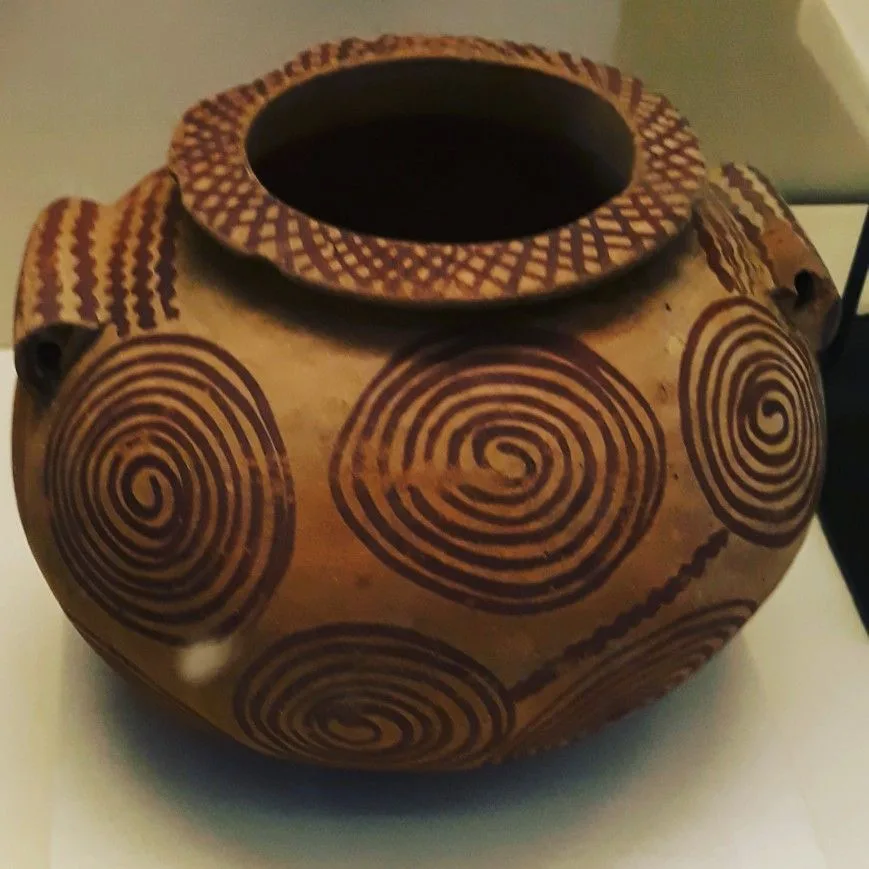
How pottery, graves, exchange and early signs reveal political change without pretending that a kingdom appeared in a single moment. This is a method for reading evidence, not a simulation of certainty or an invented first-person visit.
READING 01 / T−01
There is no clean starting line
“Predynastic” is a useful chronological label, but it can make thousands of years sound like a waiting room for pharaohs. Begin with communities on their own terms.
What supports it
Regional pottery sequences, settlement traces and burial practices change at different speeds.
Where certainty stops
Chronologies are reconstructed and revised; a ceramic phase is not a precise calendar year.
ASK THE TIMELINEWhat disappears when every object is treated only as preparation for the state?
OBSERVATION Write one feature that another reader could verify.
CONTEXT Record where, when and how the evidence was found or documented.
INTERPRETATION Use comparison, then state the degree of uncertainty.
READING 02 / T−01
A vessel can hold a chronology
Shape, clay, firing and painted motifs let archaeologists compare groups of pottery. Repetition becomes evidence only after context and sequence are recorded.
What supports it
The spiral jar belongs to a comparative series, not an isolated masterpiece.
Where certainty stops
A motif does not have one recoverable dictionary meaning simply because it repeats.
ASK THE TIMELINEWhich features can be observed directly, and which require comparison?
OBSERVATION Write one feature that another reader could verify.
CONTEXT Record where, when and how the evidence was found or documented.
INTERPRETATION Use comparison, then state the degree of uncertainty.
READING 03 / T−01
Materials map relationships
Stone, shells, pigments and vessel forms moved over distance. Their presence can show contact, but not automatically conquest, migration or a single trade route.
What supports it
Non-local materials establish movement between places even when the people involved remain unnamed.
Where certainty stops
The surviving object rarely preserves every exchange, intermediary or social obligation.
ASK THE TIMELINEHow many plausible routes could bring the same material to this place?
OBSERVATION Write one feature that another reader could verify.
CONTEXT Record where, when and how the evidence was found or documented.
INTERPRETATION Use comparison, then state the degree of uncertainty.
READING 04 / T−01
Graves are evidence, not biographies
Differences in grave goods and treatment can suggest changing social distinctions. They cannot restore a complete personality or rank from possessions alone.
What supports it
Burial assemblages allow patterned comparison across a cemetery.
Where certainty stops
Preservation, excavation history and later disturbance alter the sample.
ASK THE TIMELINEWhat claim is supported by the pattern, rather than by one spectacular grave?
OBSERVATION Write one feature that another reader could verify.
CONTEXT Record where, when and how the evidence was found or documented.
INTERPRETATION Use comparison, then state the degree of uncertainty.
READING 05 / T−01
Settlements correct the museum view
Museum displays favour durable, portable objects. Houses, food remains, work surfaces and landscape evidence return daily production to the story.
What supports it
Excavated floors, botanical remains and tool debris reveal repeated activity.
Where certainty stops
Many settlements lie beneath later occupation or were less intensively excavated than cemeteries.
ASK THE TIMELINEWhose labour becomes visible when attention shifts away from decorated objects?
OBSERVATION Write one feature that another reader could verify.
CONTEXT Record where, when and how the evidence was found or documented.
INTERPRETATION Use comparison, then state the degree of uncertainty.
READING 06 / T−01
Formation is a process
Royal imagery, administration and territorial power consolidated unevenly. “Unification” names a long transformation, not a single scene copied from a ceremonial object.
What supports it
Writing, sealings, iconography and settlement hierarchy can be read together.
Where certainty stops
Later king lists and modern period names impose order on a messier transition.
ASK THE TIMELINEWhich evidence dates the change, and which evidence merely celebrates it?
OBSERVATION Write one feature that another reader could verify.
CONTEXT Record where, when and how the evidence was found or documented.
INTERPRETATION Use comparison, then state the degree of uncertainty.
SCALE TEST / T−01
Change the zoom
Minutes to years
Material, manufacture, use, repair, deposition, excavation and display.
Years to generations
Building phases, routes, neighbourhoods, abandonment and reuse.
Generations to centuries
Exchange, institutions, environment, language and political authority.
Discovery to today
Collection, conservation, nationalism, tourism and community claims.
SOURCE PROTOCOL / REVIEWED 17 July 2026
Keep an audit trail
- Identify the claim. Separate the date, description and interpretation.
- Prefer recorded context. Object labels are entry points, not complete excavation records.
- Compare source types. Text, material and later memory answer different questions.
- Date the source itself. A modern reconstruction has its own history and assumptions.
- Preserve disagreement. Do not merge competing chronologies into false consensus.
- Revise visibly. New evidence should change the page and its review date.