Follow a palace city as gates, streets, institutions and later dynasties repeatedly turned al-Qahira into somewhere new. This is a method for reading evidence, not a simulation of certainty or an invented first-person visit.
READING 01 / T−05
Cairo was not the first city here
Fustat, al-Askar and al-Qata’i preceded Fatimid al-Qahira. The 969 foundation added a new political centre to an existing urban region.
What supports it
Archaeology, chronicles and surviving monuments locate overlapping centres.
Where certainty stops
Modern “Cairo” folds settlements with different origins into one name.
ASK THE TIMELINEWhat changes when the capital is read as a constellation rather than a single foundation?
OBSERVATION Write one feature that another reader could verify.
CONTEXT Record where, when and how the evidence was found or documented.
INTERPRETATION Use comparison, then state the degree of uncertainty.
READING 02 / T−05
A palace city controlled approach
Early al-Qahira enclosed palaces and institutions associated with the Fatimid court. Gates made political boundaries visible and managed movement.
What supports it
Descriptions, street alignments and rebuilt stone gates preserve parts of the system.
Where certainty stops
Most palace fabric vanished, so later streets can be mistaken for the original city.
ASK THE TIMELINEHow can an absent palace still organize a map?
OBSERVATION Write one feature that another reader could verify.
CONTEXT Record where, when and how the evidence was found or documented.
INTERPRETATION Use comparison, then state the degree of uncertainty.
READING 03 / T−05
Gates outlived their first wall
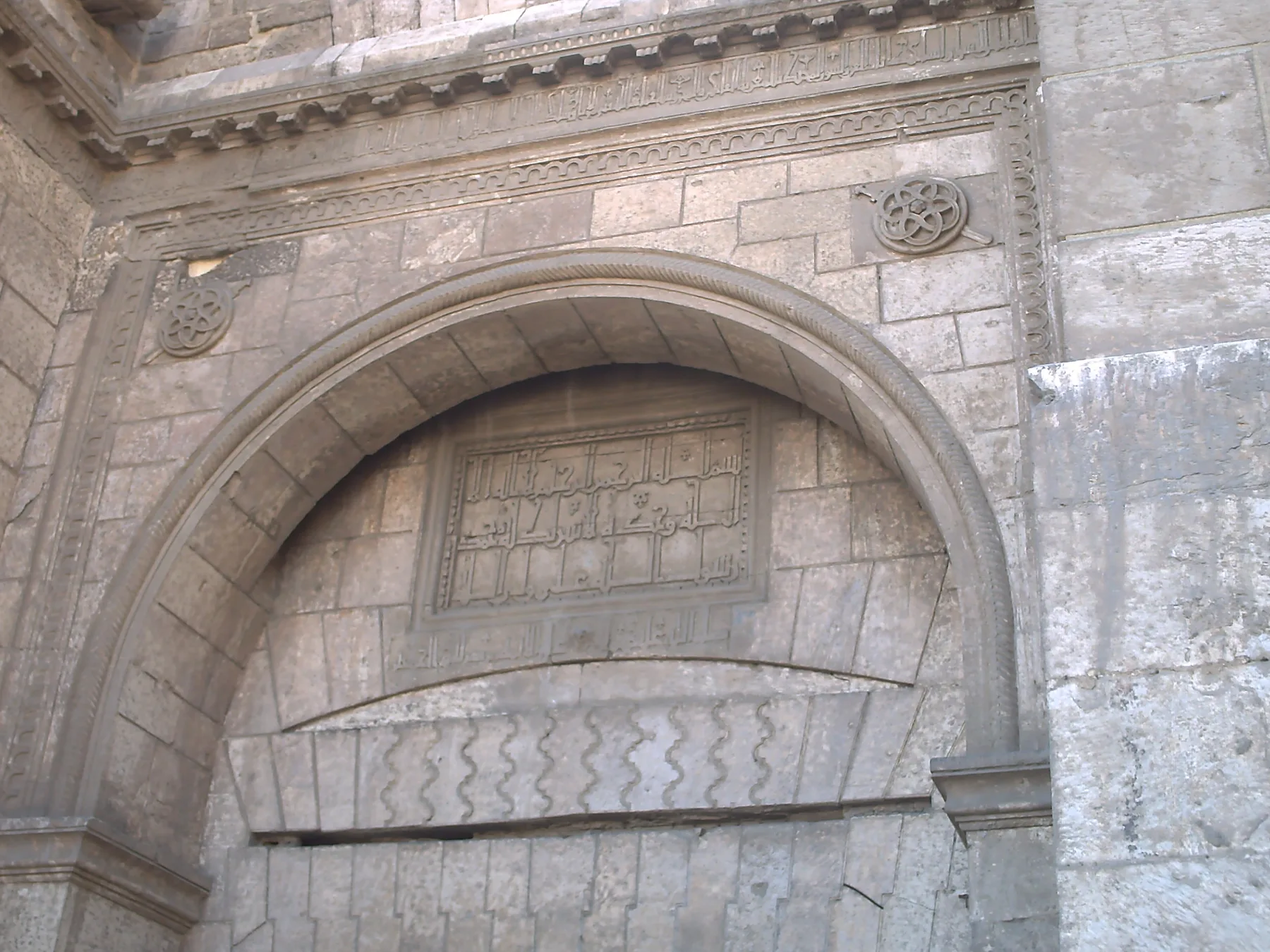
Bab al-Nasr, Bab al-Futuh and Bab Zuwayla remain powerful markers, but their functions and surroundings changed across centuries.
What supports it
Masonry, inscriptions and urban position connect military display to circulation.
Where certainty stops
Survival does not mean unchanged meaning or continuous use in one form.
ASK THE TIMELINEWhich clues belong to the gate’s construction, and which belong to its afterlife?
OBSERVATION Write one feature that another reader could verify.
CONTEXT Record where, when and how the evidence was found or documented.
INTERPRETATION Use comparison, then state the degree of uncertainty.
READING 04 / T−05
A street accumulated institutions
The north–south spine later called al-Muizz Street gathered mosques, madrasas, mausolea, markets and houses from multiple regimes.
What supports it
Dates, patronage inscriptions and building relationships produce a serial history.
Where certainty stops
A heritage route can make everyday commerce look like background scenery.
ASK THE TIMELINEHow does a street record competition between patrons?
OBSERVATION Write one feature that another reader could verify.
CONTEXT Record where, when and how the evidence was found or documented.
INTERPRETATION Use comparison, then state the degree of uncertainty.
READING 05 / T−05
New rulers edited the capital
Ayyubid, Mamluk and Ottoman projects shifted centres, reused materials and inserted new institutions. They did not simply replace one complete city with another.
What supports it
Construction joints, endowments, chronicles and decorative programmes preserve edits.
Where certainty stops
Dynastic periodization can hide projects that crossed political boundaries.
ASK THE TIMELINEWhere does reuse signal continuity, economy, authority—or all three?
OBSERVATION Write one feature that another reader could verify.
CONTEXT Record where, when and how the evidence was found or documented.
INTERPRETATION Use comparison, then state the degree of uncertainty.
READING 06 / T−05
Conservation is another urban layer
Restoration, traffic policy, tourism and housing conditions now shape how Historic Cairo survives. Monument care cannot be separated from a living neighbourhood.
What supports it
Conservation records and resident experience reveal different measures of success.
Where certainty stops
A cleaned façade does not prove that a district’s social fabric is secure.
ASK THE TIMELINEWho gets to define improvement in a historic city?
OBSERVATION Write one feature that another reader could verify.
CONTEXT Record where, when and how the evidence was found or documented.
INTERPRETATION Use comparison, then state the degree of uncertainty.
SCALE TEST / T−05
Change the zoom
Minutes to years
Material, manufacture, use, repair, deposition, excavation and display.
Years to generations
Building phases, routes, neighbourhoods, abandonment and reuse.
Generations to centuries
Exchange, institutions, environment, language and political authority.
Discovery to today
Collection, conservation, nationalism, tourism and community claims.
SOURCE PROTOCOL / REVIEWED 17 July 2026
Keep an audit trail
- Identify the claim. Separate the date, description and interpretation.
- Prefer recorded context. Object labels are entry points, not complete excavation records.
- Compare source types. Text, material and later memory answer different questions.
- Date the source itself. A modern reconstruction has its own history and assumptions.
- Preserve disagreement. Do not merge competing chronologies into false consensus.
- Revise visibly. New evidence should change the page and its review date.