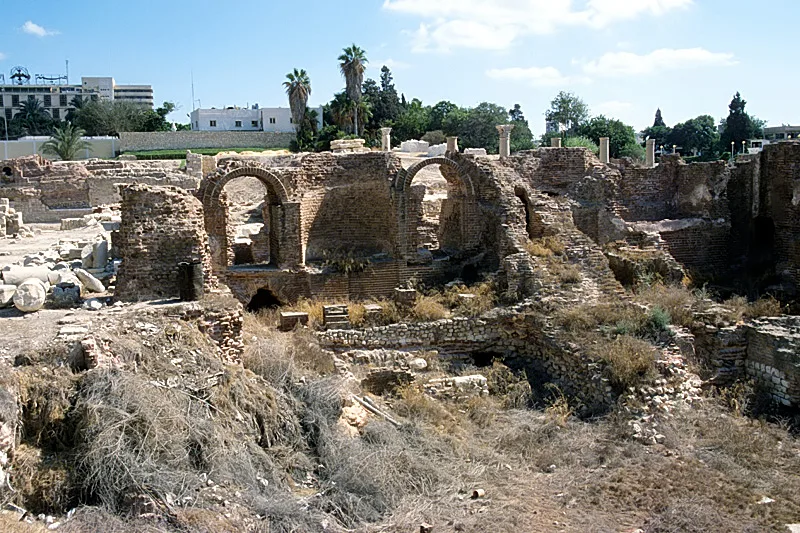
Read one living city through foundations, missing monuments, Roman streets, late antique classrooms and archaeology beneath modern blocks. This is a method for reading evidence, not a simulation of certainty or an invented first-person visit.
READING 01 / T−04
A foundation story is not a ground plan
Ancient narratives connect Alexander to the city’s beginning, but texts written for different purposes cannot substitute for excavated urban evidence.
What supports it
Literary accounts, topography and archaeology overlap without matching perfectly.
Where certainty stops
Later fame pulls uncertain details toward a confident origin scene.
ASK THE TIMELINEWhich part of the foundation can be located, and which part remains literary?
OBSERVATION Write one feature that another reader could verify.
CONTEXT Record where, when and how the evidence was found or documented.
INTERPRETATION Use comparison, then state the degree of uncertainty.
READING 02 / T−04
The most famous buildings are missing
The Library, Mouseion and royal quarter dominate Alexandria’s reputation while their exact physical forms remain disputed or lost beneath later change.
What supports it
Texts, inscriptions, comparative architecture and underwater finds provide partial constraints.
Where certainty stops
A digital reconstruction can look more certain than the evidence supporting it.
ASK THE TIMELINEHow should a museum picture a building whose footprint is not securely known?
OBSERVATION Write one feature that another reader could verify.
CONTEXT Record where, when and how the evidence was found or documented.
INTERPRETATION Use comparison, then state the degree of uncertainty.
READING 03 / T−04
Roman Alexandria reorganized movement
Streets, baths, houses, theatres and water systems show the city as infrastructure rather than a collection of rulers and scholars.
What supports it
Kom el-Dikka preserves repeated rebuilding and public investment.
Where certainty stops
Excavated areas are fragments within a much larger occupied city.
ASK THE TIMELINEWhat can circulation reveal that a statue of an emperor cannot?
OBSERVATION Write one feature that another reader could verify.
CONTEXT Record where, when and how the evidence was found or documented.
INTERPRETATION Use comparison, then state the degree of uncertainty.
READING 04 / T−04
Classrooms complicate decline
Late antique auditoria at Kom el-Dikka support a story of continued teaching and urban life. Period labels such as “decline” can conceal transformation.
What supports it
Benches, halls, inscriptions and associated finds identify patterns of use.
Where certainty stops
A room’s function may change, and architecture alone does not name every participant.
ASK THE TIMELINEWhich evidence would distinguish a classroom from another assembly space?
OBSERVATION Write one feature that another reader could verify.
CONTEXT Record where, when and how the evidence was found or documented.
INTERPRETATION Use comparison, then state the degree of uncertainty.
READING 05 / T−04
Water hides another archive
Harbour installations, submerged remains and objects recovered from the sea extend the city beyond the present shoreline.
What supports it
Underwater survey records context before lifting selected finds.
Where certainty stops
Earthquakes, subsidence, reuse and harbour works create more than one path underwater.
ASK THE TIMELINEDoes submerged automatically mean destroyed by one dramatic event?
OBSERVATION Write one feature that another reader could verify.
CONTEXT Record where, when and how the evidence was found or documented.
INTERPRETATION Use comparison, then state the degree of uncertainty.
READING 06 / T−04
The living city sets the terms
Archaeology happens among homes, roads, utilities and livelihoods. Access to the ancient city is shaped by the needs and inequalities of the modern one.
What supports it
Rescue excavation and urban records document encounters between layers.
Where certainty stops
The desire to uncover everything can conflict with present communities.
ASK THE TIMELINEWho bears the cost when one historical layer is privileged over another?
OBSERVATION Write one feature that another reader could verify.
CONTEXT Record where, when and how the evidence was found or documented.
INTERPRETATION Use comparison, then state the degree of uncertainty.
SCALE TEST / T−04
Change the zoom
Minutes to years
Material, manufacture, use, repair, deposition, excavation and display.
Years to generations
Building phases, routes, neighbourhoods, abandonment and reuse.
Generations to centuries
Exchange, institutions, environment, language and political authority.
Discovery to today
Collection, conservation, nationalism, tourism and community claims.
SOURCE PROTOCOL / REVIEWED 17 July 2026
Keep an audit trail
- Identify the claim. Separate the date, description and interpretation.
- Prefer recorded context. Object labels are entry points, not complete excavation records.
- Compare source types. Text, material and later memory answer different questions.
- Date the source itself. A modern reconstruction has its own history and assumptions.
- Preserve disagreement. Do not merge competing chronologies into false consensus.
- Revise visibly. New evidence should change the page and its review date.