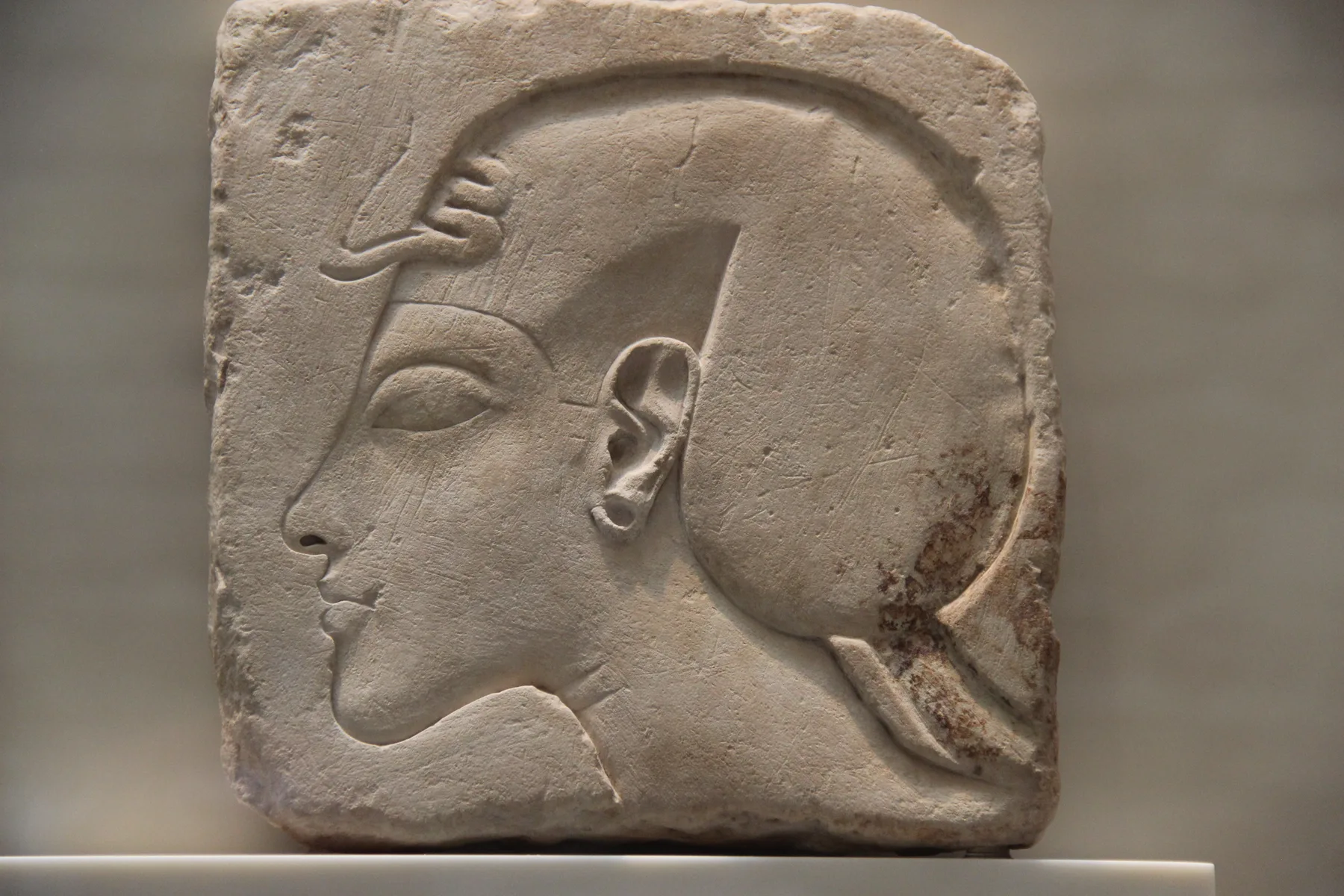
Build the episode from a new capital, altered images, diplomatic letters, reused blocks and a restoration that tried to close the rupture. This is a method for reading evidence, not a simulation of certainty or an invented first-person visit.
READING 01 / T−03
A capital was declared into being
Boundary stelae and a newly built city tied royal authority to a specific landscape. Speed of construction shaped both architecture and the evidence that survives.
What supports it
Inscriptions, survey and excavated neighbourhoods connect proclamation to urban practice.
Where certainty stops
Royal statements explain official intention, not every resident’s experience.
ASK THE TIMELINEHow does a declared city differ from the city people actually inhabited?
OBSERVATION Write one feature that another reader could verify.
CONTEXT Record where, when and how the evidence was found or documented.
INTERPRETATION Use comparison, then state the degree of uncertainty.
READING 02 / T−03
The Aten changed access to divinity
Official images centre rays extending from the sun disk toward the royal family. The scene reorganizes mediation rather than offering a complete account of private belief.
What supports it
Repeated temple and relief compositions show a controlled visual programme.
Where certainty stops
Household practice and regional continuity complicate any claim of instant religious replacement.
ASK THE TIMELINEWho is permitted to stand between the divine and the viewer?
OBSERVATION Write one feature that another reader could verify.
CONTEXT Record where, when and how the evidence was found or documented.
INTERPRETATION Use comparison, then state the degree of uncertainty.
READING 03 / T−03
Bodies became arguments
Elongated heads, narrow torsos and intimate royal scenes are often called realistic or pathological. Both shortcuts miss style as a deliberate carrier of meaning.
What supports it
Comparison with earlier and later royal art reveals patterned difference.
Where certainty stops
Images are not clinical records, and a style does not diagnose a body.
ASK THE TIMELINEWhich visual rules changed, and what work did that change perform?
OBSERVATION Write one feature that another reader could verify.
CONTEXT Record where, when and how the evidence was found or documented.
INTERPRETATION Use comparison, then state the degree of uncertainty.
READING 04 / T−03
Small blocks accelerated change
Standardized talatat blocks enabled rapid building and later rapid dismantling. Reused in other monuments, they survive as a scrambled archive.
What supports it
Block dimensions, joins and reconstructed scenes preserve parts of destroyed walls.
Where certainty stops
Reassembly depends on fragments whose original positions are often unknown.
ASK THE TIMELINECan destruction accidentally preserve evidence?
OBSERVATION Write one feature that another reader could verify.
CONTEXT Record where, when and how the evidence was found or documented.
INTERPRETATION Use comparison, then state the degree of uncertainty.
READING 05 / T−03
Letters widen the map
The Amarna letters record negotiations among courts, requests for gold and regional conflict. They reveal a connected diplomatic world, not an isolated theological experiment.
What supports it
Cuneiform tablets preserve named correspondents and recurring diplomatic formulas.
Where certainty stops
The archive is selective, official and incomplete; silence is not absence of contact.
ASK THE TIMELINEWhat does a complaint letter prove beyond the writer’s desired outcome?
OBSERVATION Write one feature that another reader could verify.
CONTEXT Record where, when and how the evidence was found or documented.
INTERPRETATION Use comparison, then state the degree of uncertainty.
READING 06 / T−03
Restoration produced an afterlife
Successors abandoned the capital, restored cults and removed names and images. The attempted closure shaped how Akhenaten’s reign was later reconstructed.
What supports it
Erasure, reuse, king lists and restoration texts document active memory work.
Where certainty stops
“Heretic” is a later interpretive label, not a neutral ancient job title.
ASK THE TIMELINEHow can suppression become one of the richest sources for what was suppressed?
OBSERVATION Write one feature that another reader could verify.
CONTEXT Record where, when and how the evidence was found or documented.
INTERPRETATION Use comparison, then state the degree of uncertainty.
SCALE TEST / T−03
Change the zoom
Minutes to years
Material, manufacture, use, repair, deposition, excavation and display.
Years to generations
Building phases, routes, neighbourhoods, abandonment and reuse.
Generations to centuries
Exchange, institutions, environment, language and political authority.
Discovery to today
Collection, conservation, nationalism, tourism and community claims.
SOURCE PROTOCOL / REVIEWED 17 July 2026
Keep an audit trail
- Identify the claim. Separate the date, description and interpretation.
- Prefer recorded context. Object labels are entry points, not complete excavation records.
- Compare source types. Text, material and later memory answer different questions.
- Date the source itself. A modern reconstruction has its own history and assumptions.
- Preserve disagreement. Do not merge competing chronologies into false consensus.
- Revise visibly. New evidence should change the page and its review date.